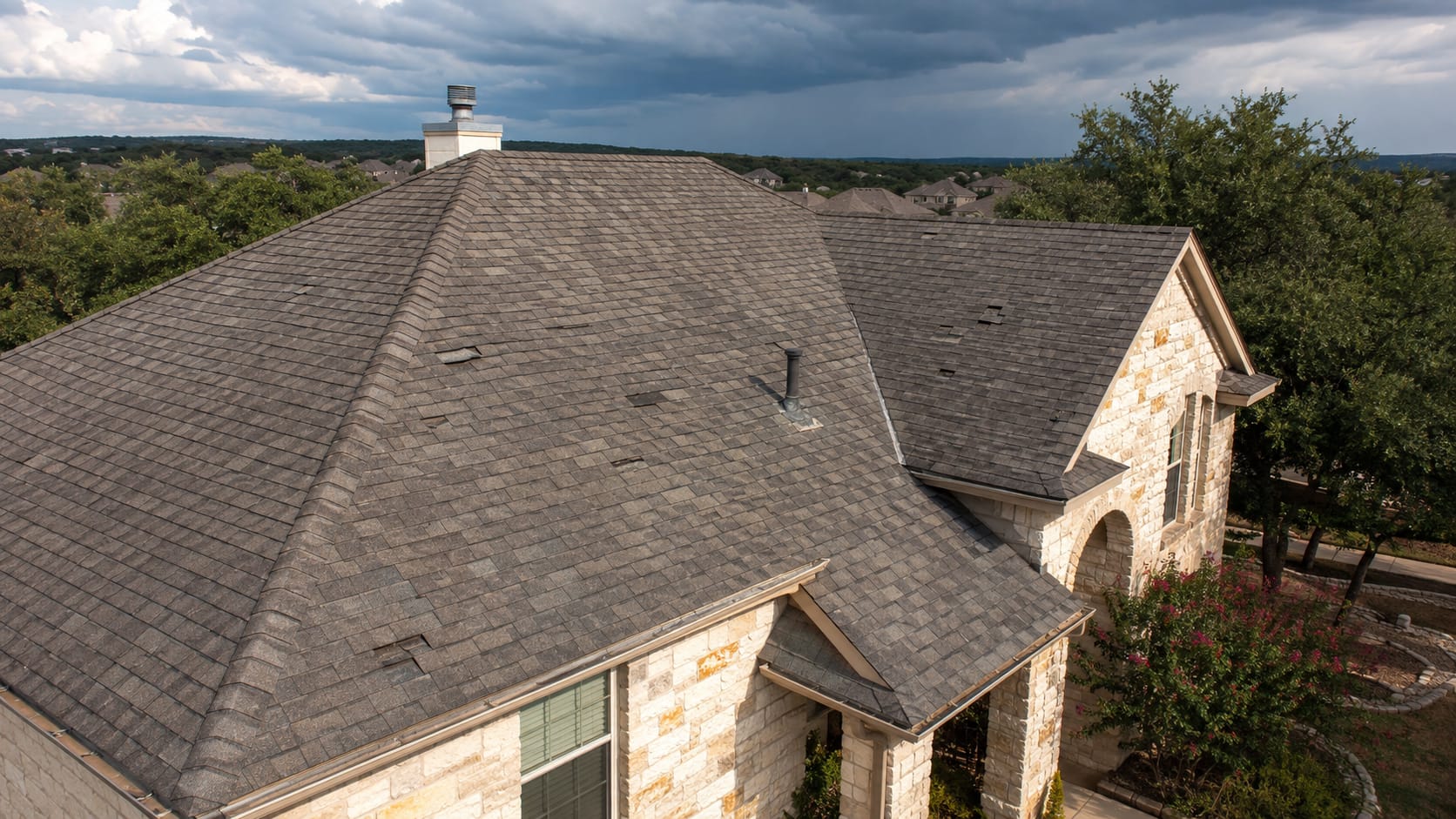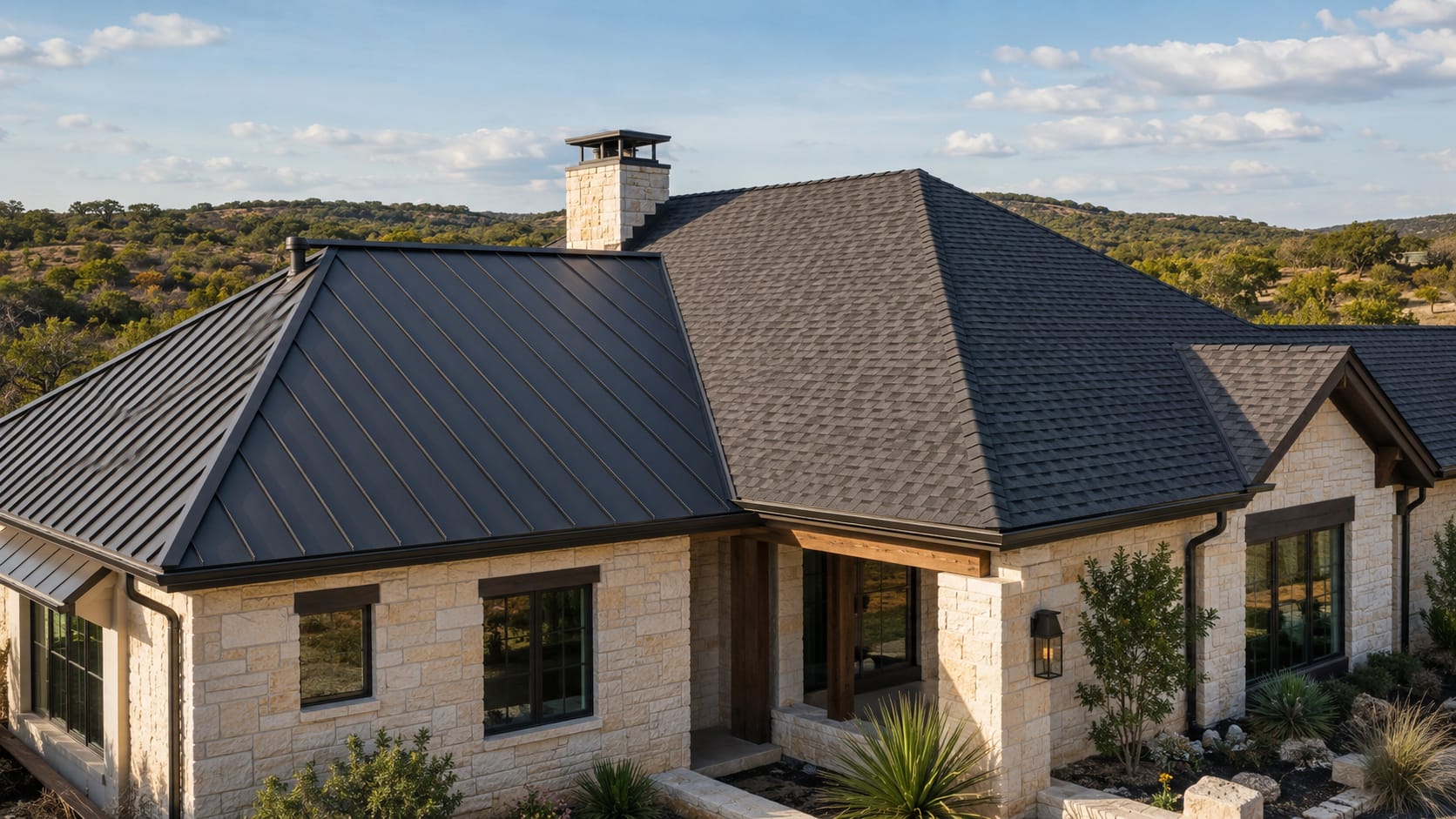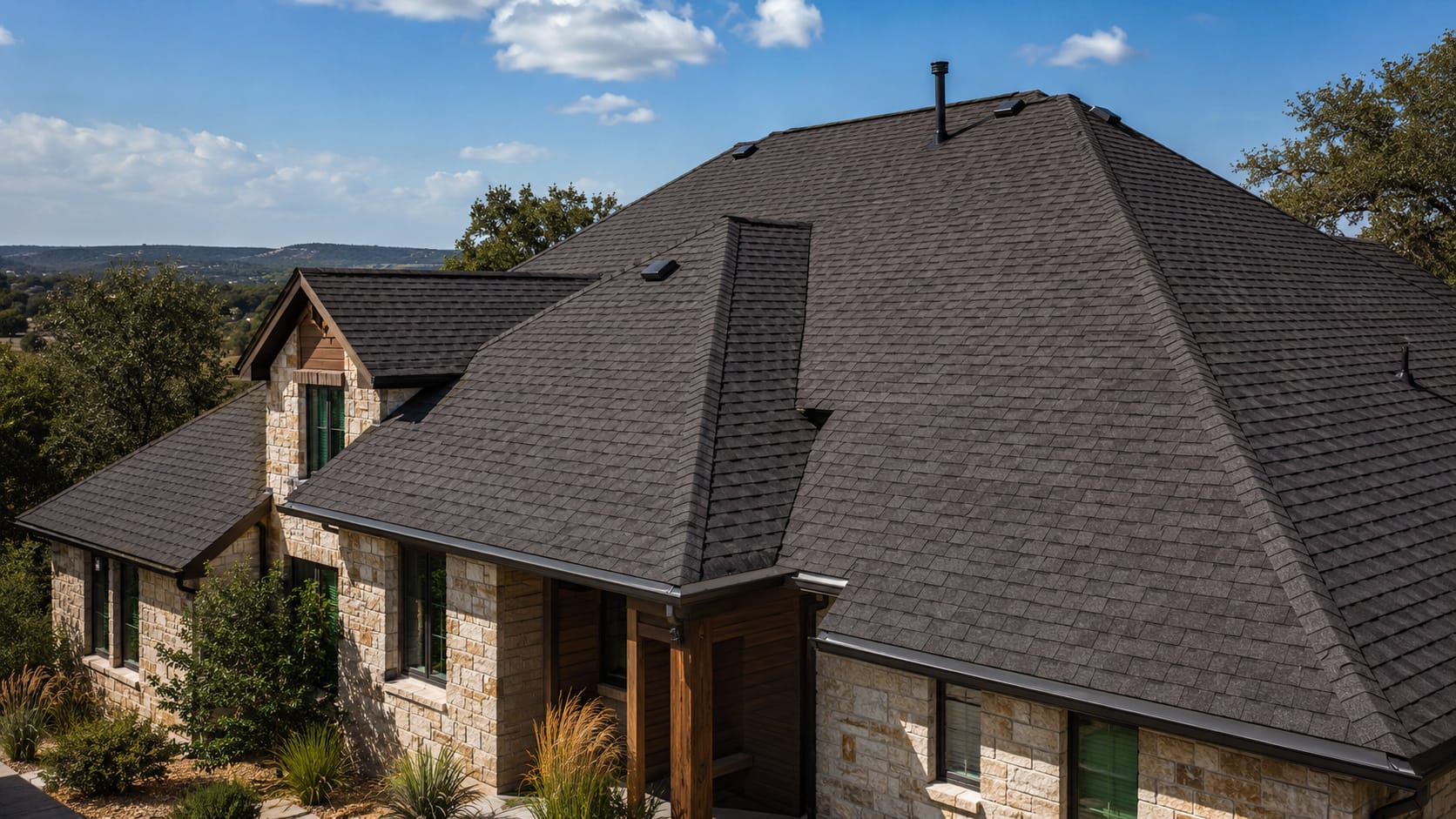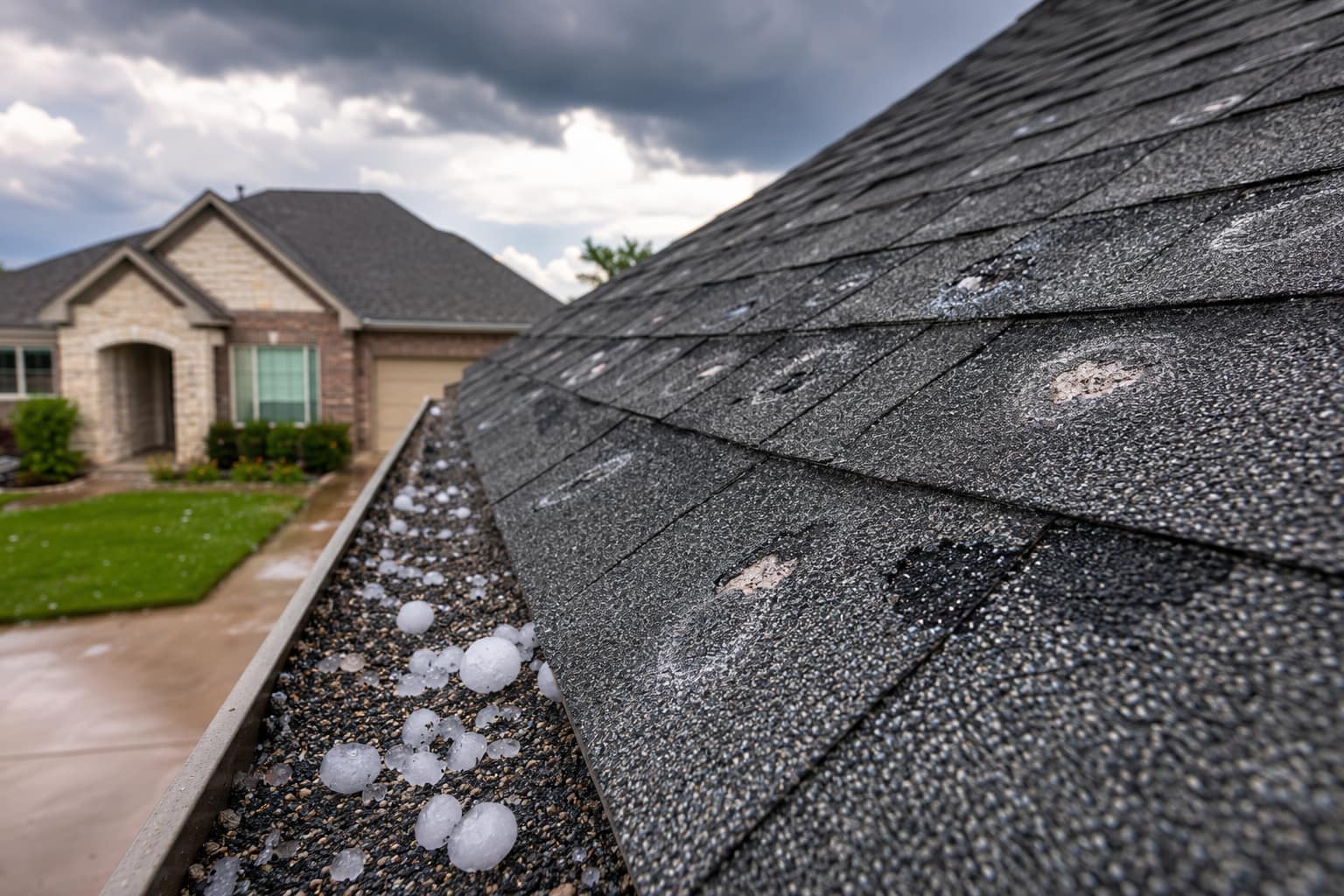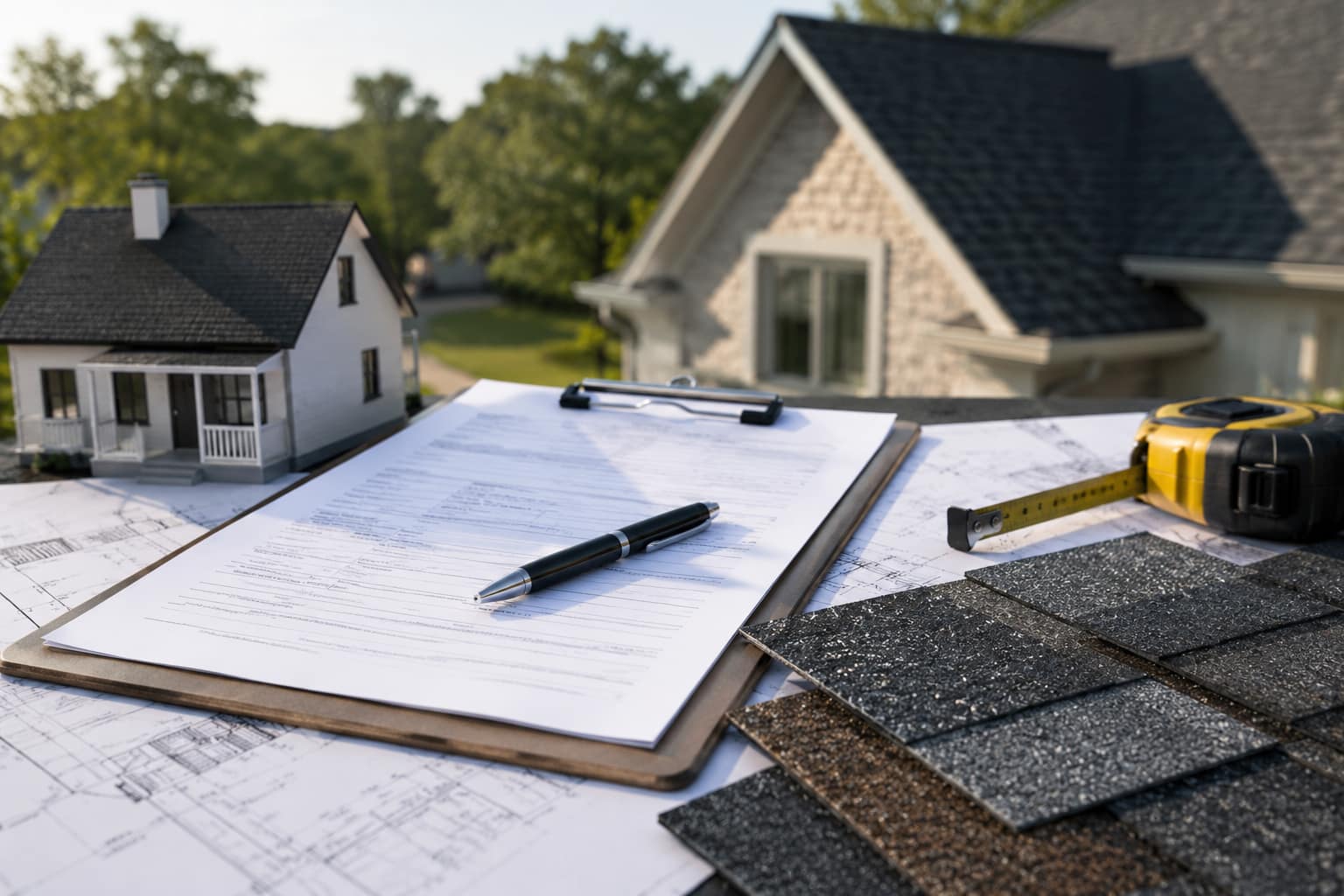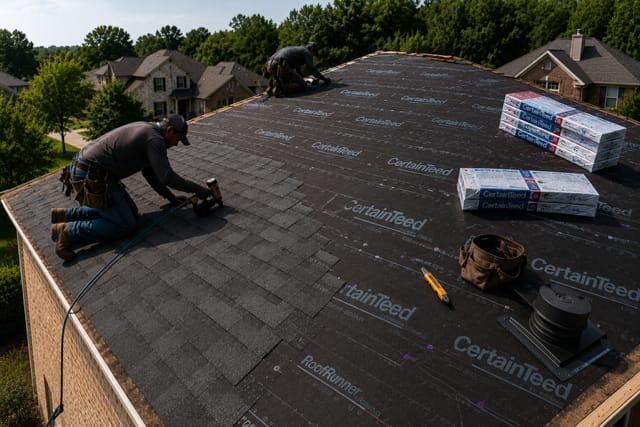
The cost of replacing a roof in Central Texas cannot be determined accurately from the home’s square footage alone. Two homes with similar floor plans can have very different roof sizes, slopes, designs, materials and installation requirements.
A straightforward asphalt-shingle roof on a single-story home will usually involve a different project scope from a steep, multi-level roof with valleys, dormers, skylights and standing-seam metal panels. Existing roofing layers, damaged decking, ventilation, flashing and property access can also affect the final project price.
That is why a useful roof replacement quote should be based on professional roof measurements, the selected roofing system, property information, current local pricing and a clearly defined scope of work.
Ironhouse Roofing allows homeowners to begin the online roof quote process without first scheduling an in-home sales appointment. You can compare available roofing systems, review the proposed project scope and see your roof replacement pricing before deciding whether to proceed.
Below are seven key factors that commonly affect roof replacement costs in Central Texas.
1. The Actual Size of the Roof
Roof size is one of the most important pricing factors, but it is not always the same as the square footage shown in a property listing.
A 2,000-square-foot home does not necessarily have a 2,000-square-foot roof. The actual roof area may be larger because of:
- Roof pitch
- Attached garages
- Covered patios
- Porches
- Overhangs
- Multiple roof sections
- Dormers
- Home additions
- Intersecting rooflines
Roofing materials are commonly measured in roofing squares, with one square representing 100 square feet of roof surface. However, the number of roofing squares required for a project must also account for roof design, installation patterns, cuts and material allowances.
Professional roof measurements help identify:
- Total roof area
- Roof pitch
- Ridge and hip lengths
- Valley lengths
- Eave and rake measurements
- Individual roof sections
- Penetrations and other visible details
These measurements allow the contractor to estimate roofing materials, underlayment, starter materials, ridge caps, flashing, trim and other components more effectively.
Ironhouse Roofing uses professional aerial roof measurements and property information as part of its online roof-pricing process. If the available aerial imagery does not provide enough information for a standard residential property, additional review may be required.
2. Roof Pitch and Design Complexity
Two roofs with the same surface area may still have different replacement costs because of their pitch and design.
A simple gable roof generally has fewer cuts, transitions and material details than a complex roof containing multiple valleys, hips, dormers, walls and intersecting sections. More complex designs may require additional labor, flashing, materials and installation time.
Features that can increase roof complexity include:
- Steep roof slopes
- Multiple stories
- Valleys and hips
- Dormers
- Skylights
- Chimneys
- Roof-to-wall transitions
- Low-slope sections
- Multiple roof elevations
- Solar equipment
- Numerous vents or penetrations
- Limited staging or ladder access
Steeper roofs may require additional safety procedures and equipment. Complicated rooflines can also result in more material cuts and a higher material allowance.
This does not mean that every complex roof will be exceptionally expensive. It means that roof complexity must be included in the measurements and project scope instead of using a basic price based only on the home’s interior square footage.
Homes in communities such as Dripping Springs, Marble Falls and other Hill Country areas may have larger or more customized rooflines. Homeowners can review more location-specific information on the Dripping Springs roof replacement page and the Marble Falls roofing page.
3. The Roofing Material You Select
The selected roofing system has a major effect on the initial project price.
Ironhouse Roofing focuses on two residential roofing options:
- Architectural asphalt-shingle roofing
- Standing-seam metal roofing with concealed fasteners
Each system has different material, fabrication and installation requirements.
Architectural Asphalt Shingles
Architectural asphalt shingles are widely used throughout Central Texas. They generally have a lower initial project cost than standing-seam metal roofing and are available in different product lines, colors and classifications.
The price of an asphalt-shingle roofing system may vary according to:
- Manufacturer and product line
- Shingle design and color
- Wind rating
- Impact-resistance classification
- Algae-resistance features
- Underlayment
- Starter shingles
- Ridge-cap shingles
- Ventilation components
- Manufacturer warranty requirements
Some products are marketed with enhanced wind or impact-resistance classifications. These classifications and warranties should be reviewed using the manufacturer’s written documentation. No asphalt shingle is hail-proof or immune to all storm damage.
The Texas Department of Insurance recommends considering local wind and hail conditions when selecting roofing materials. Its guidance for homeowners choosing roofing products also explains the importance of product testing, decking, flashing and ventilation.
Learn more about the components and process involved in an architectural asphalt-shingle roof replacement.
Standing-Seam Metal Roofing
Residential standing-seam metal roofing usually requires a higher initial investment than architectural asphalt shingles. The system uses vertical metal panels and concealed fasteners, giving it a distinct appearance and different installation requirements.
Standing-seam pricing may be affected by:
- Panel material
- Panel width and profile
- Seam specifications
- Galvalume or selected standard-color finish
- Roof design
- Panel fabrication requirements
- Flashing and trim
- Valleys and transitions
- Underlayment
- Installation complexity
- Warranty requirements
A complex roof can require more customized metal cuts, trim and flashing than a simple roofline. Because of this, standing-seam pricing must account for both roof measurements and design complexity.
Ironhouse Roofing’s residential metal offering is standing-seam metal roofing with concealed fasteners. It should not be confused with exposed-fastener panels, corrugated roofing or every other type of residential metal roof.
Homeowners comparing these two systems can also read our guide to standing-seam metal roofing versus asphalt shingles.
4. Removal and Disposal of the Existing Roof
A complete roof replacement usually involves removing the existing roofing materials before installing the new system. The tear-off requirements can affect labor, disposal and project timing.
Relevant factors may include:
- Type of existing roofing material
- Number of existing layers
- Total roof area
- Material weight
- Disposal requirements
- Property access
- Distance between the roof and disposal container
- Protection required for driveways and landscaping
Removing one layer of asphalt shingles is different from removing multiple roofing layers or heavier materials. Existing underlayment, fasteners, flashing and deteriorated accessories may also need to be removed as part of the approved scope.
Tear-off gives the installation team an opportunity to view the roof decking. Some decking conditions cannot be fully confirmed until the existing roof covering has been removed.
Your proposal should explain whether removal, disposal and cleanup are included. When comparing contractor proposals, make sure one quote does not appear lower simply because tear-off, disposal or necessary roofing components have been excluded.
Ironhouse Roofing’s roof quote comparison service helps homeowners compare written proposals based on materials, scope, exclusions, installation requirements and price—not the total number alone.
5. Roof Decking and Concealed Conditions
Roof decking forms the structural surface beneath the roofing materials. It must provide a suitable base for the approved roofing system.
Visible property information and aerial measurements can help calculate the initial roof replacement price, but some decking conditions remain concealed until tear-off.
Examples may include:
- Rotted or moisture-damaged decking
- Soft or deteriorated areas
- Improperly secured decking
- Open gaps
- Previous patchwork
- Damage around roof penetrations
- Deterioration near valleys or flashing
- Decking that does not meet the selected system’s requirements
The Texas Department of Insurance advises that roof decking should be examined after the roof covering is removed and that damaged decking should be replaced where necessary.
Because these conditions may be hidden before removal, the agreement should explain how documented concealed conditions will be handled.
With Ironhouse Roofing, when a roofing system is selected and the agreement is signed, the approved amount becomes the contract price. A later adjustment must be connected to a customer-requested change or a documented concealed condition outside the disclosed scope, such as damaged decking found after tear-off.
A pre-production verification is used to confirm project details, access, visible installation conditions and selected materials. It is not the step used to create or routinely change the initial roof price.
6. Roofing-System Components Beyond the Visible Material
Shingles or metal panels are only the visible portion of a complete roofing system. A properly defined roof replacement scope may include several additional components.
Depending on the property and selected system, these may include:
- Roofing underlayment
- Water-protection components
- Drip edge
- Starter shingles
- Ridge-cap materials
- Valleys
- Wall and chimney flashing
- Pipe boots
- Roof vents
- Intake and exhaust ventilation
- Metal trim
- Fasteners
- Sealants
- Property protection
- Cleanup and disposal
The condition and design of these components can affect the project price.
Flashing
Flashing helps manage water around chimneys, walls, valleys and roof penetrations. Some flashing may be reusable in limited situations, while other flashing must be replaced or redesigned according to the approved system and existing conditions.
The proposal should clearly state which flashing components are included.
Ventilation
Roof and attic ventilation can affect moisture management and roofing-system performance. The existing ventilation system may need to be reviewed when a roof is replaced.
Changes to ventilation can affect:
- Material quantities
- Labor
- Roof penetrations
- Intake and exhaust components
- Manufacturer installation requirements
Ventilation should not be treated as an automatic one-size-fits-all upgrade. The appropriate design depends on the home, attic, roof layout and selected roofing system.
Product and System Requirements
Different products may have specific installation instructions or warranty requirements. A lower-priced quote may use different underlayment, starter materials, ridge components or flashing details than another proposal.
That is why homeowners should ask what is included rather than comparing only the bottom-line price. Our guide to what should be included in a roof replacement quote explains the scope items worth reviewing before signing an agreement.
7. Labor, Access, Permits and Project Logistics
Roof replacement pricing must also account for the work required to complete the approved scope safely and professionally at the property.
Project logistics can vary based on:
- Roof height
- Roof pitch
- Number of stories
- Driveway and property access
- Landscaping
- Fences and gates
- Nearby structures
- Material-delivery access
- Disposal-container placement
- Required property protection
- Local permitting requirements
- Material availability
- Weather and scheduling
A home with easy driveway access and a simple one-story roof may require different staging from a home on a narrow lot, steep Hill Country property or heavily landscaped site.
Local permits and inspection requirements can also vary. Homeowners should confirm applicable requirements for their city or jurisdiction. FEMA recommends checking with local building officials before construction because permits and current building requirements may apply to roof and structural work.
Weather can influence scheduling, but it should not be used as an arbitrary pricing explanation. The written proposal should identify the roofing system, work being performed and known scope-related costs.
Ironhouse Roofing provides complete residential roof replacement throughout its Central Texas service area, including Austin, Buda, Kyle, Cedar Park, Dripping Springs, Round Rock, Georgetown, Leander, San Marcos and Marble Falls.
Why Roof Replacement Prices Differ Between Contractors
It is common for homeowners to receive roofing proposals with different totals. However, the difference is not always caused by one contractor charging more for the same work.
The proposals may include different:
- Roof measurements
- Material quantities
- Roofing products
- Underlayment
- Flashing
- Ventilation
- Tear-off requirements
- Disposal and cleanup
- Decking allowances
- Installation details
- Warranties
- Exclusions
One proposal may include a complete roofing system, while another may leave several components undefined or list them as additional charges.
Before choosing a contractor, compare:
- The roof measurements used
- The exact roofing product
- The complete installation scope
- Included roofing-system components
- Tear-off and disposal
- Decking terms
- Flashing and ventilation
- Warranty information
- Exclusions
- Circumstances that could change the price
The lowest initial figure is not automatically the best value, and the highest proposal is not automatically the most complete. The written scope should explain what you are purchasing.
How Insurance Can Affect What the Homeowner Pays
If a roof has been affected by hail, wind or another storm, the homeowner may have an estimate from an insurance company.
Insurance estimates and contractor proposals serve different purposes. The insurer determines policy coverage and claim decisions. A roofing contractor can review roof measurements, quantities and the replacement scope but should not interpret the policy or act as a public adjuster unless separately licensed to do so.
The Texas Department of Insurance explains that insurance policies may settle roof claims differently depending on whether the roof is covered at replacement cost or actual cash value. Deductibles and policy conditions can also affect the homeowner’s out-of-pocket amount. Homeowners should discuss policy questions directly with their insurer or licensed insurance representative.
Ironhouse Roofing can provide an insurance roof estimate review to compare the roofing measurements and replacement scope in the insurance document with the roofing work being proposed.
Ironhouse Roofing does not interpret insurance policies, determine coverage or negotiate claim decisions.
How to Get a More Useful Roof Replacement Price
A useful roof replacement price should be connected to the actual property and selected roofing system.
When requesting a quote, be prepared to provide:
- Property address
- Basic project information
- Preferred roofing system
- Known roof conditions
- Insurance estimate, if applicable
- Another contractor’s proposal, if you want a comparison
- Relevant photographs or documents, where available
Professional aerial measurements and property data can then be used to understand the roof size, pitch and design. After reviewing the available roofing systems and disclosed scope, you can compare the applicable project prices.
Ironhouse Roofing allows most homeowners to begin online without first scheduling a traditional in-home sales presentation. Learn more about how the Ironhouse Roofing process works.
Frequently Asked Questions About Roof Replacement Costs
How much does a roof replacement cost in Central Texas?
There is no single price that applies to every Central Texas home. The cost depends on the measured roof area, pitch, complexity, selected roofing system, removal requirements, roofing components, property access and disclosed project scope.
For more location-specific information, read our guide to roof replacement costs in Austin, Texas.
Is roof replacement priced using the home’s square footage?
Not by itself. Interior living area does not fully represent the roof surface. A roof quote should use roof measurements that account for pitch, garages, porches, overhangs and different roof sections.
Is a standing-seam metal roof more expensive than asphalt shingles?
Residential standing-seam metal roofing generally has a higher initial project cost than architectural asphalt shingles. The actual difference depends on roof size, complexity, panel requirements, selected finishes and the complete installation scope.
Can I receive roof replacement pricing online?
Yes. Ironhouse Roofing uses professional aerial measurements, property information, the selected roofing system, current local pricing and the disclosed scope to prepare online roof replacement pricing for most standard residential properties.
If available imagery or project information requires additional review, Ironhouse Roofing will notify you during the quote process.
Can hidden decking damage change the contract price?
A documented concealed condition outside the approved scope, such as damaged decking discovered after tear-off, may require additional work and a corresponding price adjustment. The contractor should document the condition and handle it according to the agreement.
Does a higher-priced shingle always mean a better roof?
Not necessarily. Product classification, installation requirements, roof design, roofing-system components, contractor workmanship and warranty terms should all be considered. Compare the complete system and written scope rather than relying only on the price of the visible shingle.
Does Ironhouse Roofing offer financing?
Roof replacement financing may be available to qualified homeowners through a third-party provider. Eligibility, rates, fees and repayment terms are determined by that provider. Visit the roof replacement financing page for more information.
Review Your Central Texas Roof Replacement Price Online
Roof replacement costs in Central Texas depend on more than the home’s square footage or the visible roofing material.
The measured roof area, pitch, complexity, selected roofing system, tear-off requirements, decking conditions, roofing components and installation logistics all contribute to the complete project scope.
Ironhouse Roofing helps homeowners review these details through an online-first process. You can compare architectural asphalt shingles with residential standing-seam metal roofing, review the disclosed scope and see your roof replacement price without first scheduling an in-home sales appointment.
Start your online roof quote and move forward when the roofing system, project information and price make sense for your home.