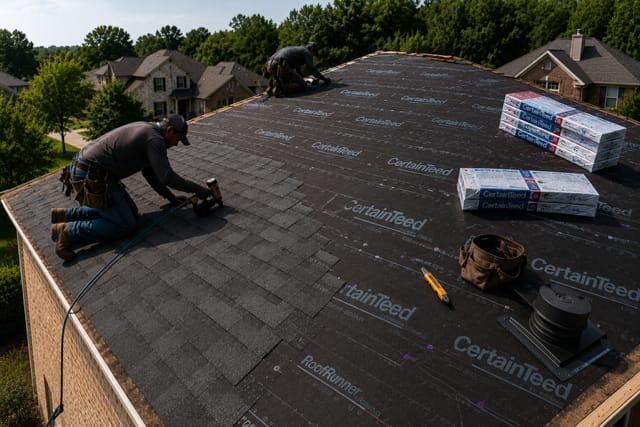
Knowing when to replace your roof is not always straightforward. Some roofing problems are easy to see from the ground, while others develop beneath the visible materials or become apparent only after heavy rain, hail or strong winds.
A missing shingle does not automatically mean the entire roof needs to be replaced. Likewise, an older roof should not be replaced based on age alone. The appropriate decision depends on the roofing material, extent of deterioration, installation quality, roof design, previous storm exposure and condition of the complete roofing system.
Central Texas roofs regularly face intense sunlight, high temperatures, heavy rainfall, hail, strong winds and sudden weather changes. Over time, these conditions may contribute to deterioration of shingles, flashing, underlayment, ventilation components and other parts of the roof.
Homeowners should pay attention to patterns rather than relying on one isolated symptom. Widespread material deterioration, recurring leaks, extensive storm impact or multiple failing components may indicate that complete roof replacement should be considered.
This guide explains seven warning signs Texas homeowners should not ignore and what to evaluate before deciding whether it is time to replace the roof.
1. Your Roofing Materials Are Reaching the End of Their Expected Service Life
Roof age is an important starting point, but it is not a complete diagnosis.
The service life of a residential roof depends on several factors:
- Roofing material and product line
- Installation quality
- Roof pitch and design
- Attic ventilation
- Sun and heat exposure
- Tree coverage and debris
- Hail and wind exposure
- Maintenance history
- Previous repairs
- Manufacturer installation requirements
Architectural asphalt shingles may provide years of reliable residential performance, but their condition can vary considerably between properties. Two roofs installed in the same year may not age at the same rate if one receives intense afternoon sunlight while the other is partly shaded or has different ventilation conditions.
Standing-seam metal roofing may be considered as a longer-term alternative, but its performance also depends on panel specifications, finish, flashing, roof design and professional installation.
Instead of assuming that every roof must be replaced at a particular age, review:
- The approximate installation date
- The specific roofing product, if known
- Previous storm history
- Warranty documentation
- Visible deterioration
- Recurring problems
- The condition of related roofing components
If you do not know the roof’s age, check previous property records, home-improvement documents, permits, inspection reports or information supplied when you purchased the home.
Our guide to how long asphalt-shingle roofs last in Central Texas explains why product quality, weather exposure and installation matter alongside age.
2. Shingles Are Missing, Lifted, Cracked or Visibly Deteriorated
Asphalt shingles form the visible outer layer of many Central Texas residential roofs. When they become damaged or deteriorated, the underlying roofing components may become more exposed to wind and water.
Visible shingle conditions may include:
- Missing shingles
- Lifted shingle edges
- Creased shingles
- Cracked materials
- Broken corners
- Curling or distorted shingles
- Exposed underlayment
- Loose ridge-cap shingles
- Areas that appear uneven
- Repeated damage across different roof slopes
One isolated missing or damaged shingle does not automatically establish the need for complete roof replacement. However, widespread deterioration across multiple roof sections may indicate that the roofing materials are no longer performing consistently.
Lifted or creased shingles can be associated with wind exposure. Cracking, curling and surface deterioration may develop because of age, prolonged heat exposure, installation conditions or a combination of factors.
Homeowners should not climb onto the roof to investigate. A roof may be steep, slippery or structurally unsafe, particularly after a storm. Begin with observations from the ground and use a qualified roofing professional when closer review is necessary.
If the damage is widespread or the existing roofing system is nearing the end of its useful service life, it may be practical to compare complete architectural asphalt-shingle roof replacement with other available options.
3. Excessive Granule Loss Is Appearing Across the Roof
Asphalt shingles contain protective surface granules. These granules contribute to the appearance and performance of the shingle surface.
A small amount of loose material may be present after installation or collect naturally over time. The more important concern is excessive or uneven granule loss across the roof.
Possible signs include:
- Large quantities of granules in gutters or near downspouts
- Dark or smooth areas on shingle surfaces
- Uneven color across roof slopes
- Exposed asphalt
- Circular or irregular areas of surface loss
- Deterioration concentrated on heavily exposed roof sections
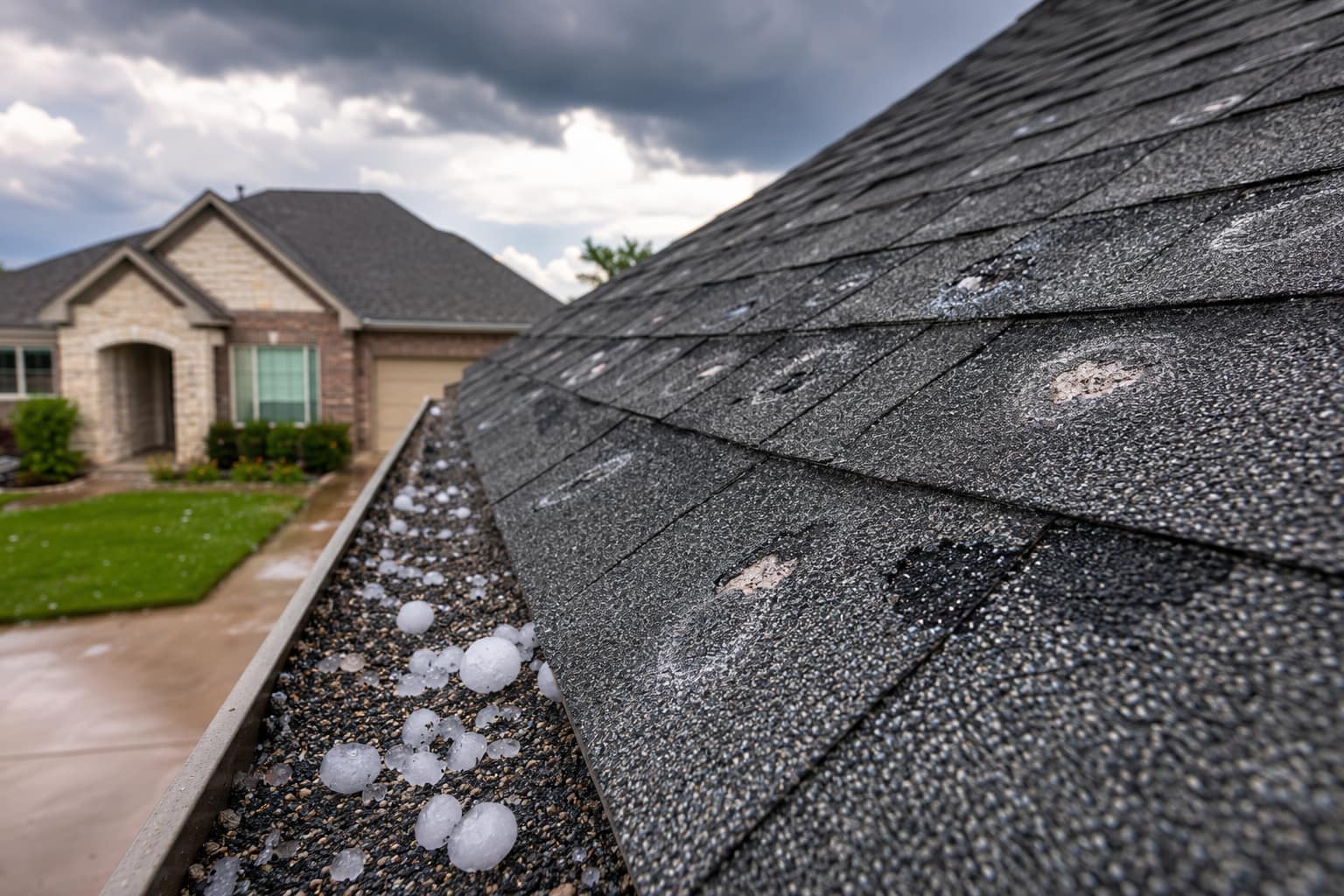
Granule loss may be associated with normal aging, foot traffic, manufacturing characteristics, hail impact or prolonged weather exposure. It should be evaluated alongside other conditions rather than treated as automatic proof of storm damage or a reason for immediate replacement.
Hail-related surface conditions can also be confused with normal wear, blistering or mechanical damage. The Insurance Institute for Business & Home Safety provides a useful consumer guide to understanding possible hail damage.
If granule loss is widespread and accompanied by cracking, exposed asphalt, leaks or other deterioration, the roof may require a broader review.
Our article explaining what hail damage can look like on an asphalt-shingle roof provides additional examples and limitations.
4. Water Stains, Roof Leaks or Attic Moisture Keep Returning
Water entering a home should never be ignored. Even a small stain can indicate that moisture has reached an area that should remain protected.
Possible interior warning signs include:
- Water stains on ceilings
- Discolored drywall
- Damp attic insulation
- Moisture around vents or chimneys
- Bubbling or peeling paint
- Mold or mildew in the attic
- Darkened roof decking
- Water dripping during heavy rain
- Musty odors
- Warped or deteriorated wood
A visible ceiling stain does not always identify where the water entered. Moisture may travel along rafters, roof decking, pipes or other surfaces before appearing inside the living area.
Water intrusion can be connected to:
- Damaged shingles
- Failed flashing
- Deteriorated pipe boots
- Open roof penetrations
- Improperly installed components
- Wind-driven rain
- Damaged decking
- Ventilation or condensation issues
- Previous incomplete work
The U.S. Department of Energy’s Guide to Durable Attics identifies wet insulation, mold, warped wood and deteriorated soffit or fascia materials as possible signs of moisture intrusion. It also explains that attic moisture may come from roof leaks, flashing problems or inadequate ventilation.
A single leak does not necessarily require full replacement. However, recurring leaks in different areas, widespread moisture damage or failure across multiple roof components may suggest that a complete replacement should be evaluated.
If water is actively entering the home or the ceiling is sagging, move people and valuables away from the affected area and seek appropriate professional assistance. Do not enter an attic where electrical hazards, structural instability or standing water may be present.
5. Flashing, Valleys or Roof Penetrations Are Failing
Many roof leaks begin around transitions rather than in the middle of an open roof slope.
Flashing helps direct water away from areas where the roof meets:
- Chimneys
- Walls
- Dormers
- Skylights
- Valleys
- Plumbing vents
- Exhaust vents
- Other roof penetrations
Visible warning signs may include:
- Loose or lifted flashing
- Rust or corrosion
- Open seams
- Missing sealant
- Cracked pipe boots
- Gaps near walls or chimneys
- Repeated staining below a penetration
- Debris collecting in valleys
- Previous patches that are separating
FEMA advises homeowners to check roof flashing because poorly secured or deteriorated flashing can allow water to enter around roof openings and transitions.
The condition of flashing becomes particularly important when an older roof has received repeated localized work. Layers of sealant or patching may temporarily obscure the underlying problem without addressing the complete installation detail.
A professional roof replacement proposal should clearly explain how valleys, penetrations, wall transitions and flashing will be handled. Homeowners should not assume that every contractor includes the same flashing work.
Read our guide to what should be included in a roof replacement quote before comparing proposals.
6. The Roofline Appears Uneven, Sagging or Structurally Distorted
A sagging or visibly distorted roofline is different from ordinary surface wear and should be taken seriously.
Possible warning signs include:
- A dip or depression in the roof plane
- Wavy roof sections
- Sagging between rafters
- Soft-looking areas
- Uneven ridges
- Movement near roof transitions
- Warped or deteriorated decking
- Interior ceiling movement
- Cracking connected to structural movement
These conditions may be associated with decking deterioration, framing issues, long-term moisture exposure, installation problems or excessive loading. They cannot be accurately diagnosed from appearance alone.
A sagging roof does not automatically mean the roofing material is the only problem. Structural framing, decking or moisture conditions may need separate review by an appropriately qualified professional.
Do not walk on or beneath an area that appears unstable. If there is sudden movement, active collapse, severe storm damage or concern about structural safety, leave the affected area and contact the appropriate emergency or building professional.
During a complete roof replacement, the existing roofing materials are removed and the exposed decking can be reviewed. Documented damaged decking outside the approved scope should be photographed, explained and handled according to the agreement.
7. Widespread Hail or Wind Damage Is Visible After a Storm
Central Texas storms can expose roofs to hail, high winds, wind-driven rain and airborne debris.
Storm-related warning signs may include:
- Missing shingles
- Lifted or creased shingles
- Widespread impact marks
- Excessive granule displacement
- Dented vents or flashing
- Damaged metal panels or trim
- Exposed underlayment
- Debris on the roof
- Roofing materials found around the property
- New water stains after a storm
Not every hailstorm causes the same type or extent of damage. Roof condition depends on hail size, wind direction, storm intensity, roof age, roofing material and the angle of impact.
Likewise, not every mark on a roof is hail damage. Blistering, normal wear, manufacturing characteristics, foot traffic and falling debris can create different surface conditions.
After severe weather:
- Check the property from the ground.
- Photograph visible damage where it is safe to do so.
- Look for missing materials around the yard.
- Check ceilings and accessible attic areas for water.
- Review the date and approximate time of the storm.
- Contact the insurer directly if you have questions about policy coverage or filing a claim.
- Avoid contractors who offer to waive deductibles or make unsupported insurance promises.
The Texas Department of Insurance’s roof guidance recommends checking for missing or damaged shingles after storms and explains that insurance coverage can vary based on the policy, roof age and settlement terms.
Ironhouse Roofing provides complete storm-damage roof replacement rather than general roof repairs. If you have an insurance estimate, you can upload the complete document through the online quote process for a comparison of the roofing measurements and replacement scope.
Ironhouse Roofing does not interpret insurance policies, determine coverage, negotiate claim decisions or act as a public adjuster.
Warning Signs That Do Not Automatically Mean You Need a New Roof
Homeowners should take visible roofing problems seriously, but no single sign automatically proves that the entire roof requires replacement.
The appropriate next step depends on:
- How much of the roof is affected
- Age and condition of the materials
- Whether the problem is isolated or widespread
- Previous repair history
- Presence of leaks or decking damage
- Number of failing components
- Selected roofing system
- Long-term plans for the property
For example, an isolated damaged accessory is different from widespread shingle deterioration across several slopes. One ceiling stain is different from recurring leaks appearing in multiple parts of the home.
The purpose of reviewing warning signs is to identify when further evaluation is justified—not to diagnose every roof from the ground.
Ironhouse Roofing focuses on complete residential roof replacement. Homeowners can begin by reviewing roof measurements, roofing-system options, project information and replacement pricing online.
Repair or Replace: What Should a Texas Homeowner Consider?
The decision between limited repair and complete replacement depends on the individual property.
Questions worth considering include:
Is the damage isolated or widespread?
A small, localized condition may not justify complete replacement. Widespread deterioration across multiple roof slopes presents a different situation.
Are the roofing materials still available?
Matching older shingles or discontinued colors may be difficult. Material availability can affect the appearance and practicality of localized work.
Have problems continued after previous work?
Recurring leaks or repeated work in different areas may indicate that the overall roofing system needs to be evaluated.
Is the roof approaching the end of its useful service life?
The remaining condition and expected performance of the existing materials should be considered alongside the cost and scope of further localized work.
Are multiple components deteriorating?
Problems involving shingles, flashing, ventilation, underlayment and decking may support consideration of a complete roofing system rather than focusing only on the visible surface.
What are your long-term plans?
A homeowner planning to stay in the property may compare roofing systems differently from someone preparing to sell. Budget, appearance, initial cost and long-term priorities can all influence the decision.
Ironhouse Roofing does not provide general roof-repair services. Its online process is designed for homeowners considering complete residential roof replacement.
Choosing a Replacement Roofing System
If complete replacement is appropriate, Texas homeowners can compare architectural asphalt shingles with residential standing-seam metal roofing.
Architectural Asphalt Shingles
Architectural asphalt shingles generally provide a lower initial project cost and are available in a range of residential colors, product lines and classifications.
Available features may vary by manufacturer and can include:
- Wind ratings
- Impact-resistance classifications
- Algae-resistance features
- Different architectural styles
- Manufacturer warranty options
- Coordinated roofing-system components
Learn more about asphalt-shingle roof replacement in Central Texas.
Standing-Seam Metal Roofing
Residential standing-seam metal roofing uses concealed fasteners and may be worth comparing if you are considering a longer-term alternative to asphalt shingles.
The system generally has a higher initial project cost. Available options may include galvalume and standard-color finishes, depending on product availability and the approved roofing system.
Learn more about standing-seam metal roofing in Austin and Central Texas.
No roofing material is hail-proof or immune to every type of storm damage. The appropriate system depends on the property, roof design, budget, installation requirements and homeowner’s long-term plans.
You can also review our detailed standing-seam metal roof versus asphalt-shingle comparison.
How Online Roof Replacement Pricing Works
Ironhouse Roofing allows most homeowners to begin the complete roof replacement process online without first scheduling an in-home sales presentation.
The online price is calculated using:
- Professional aerial roof measurements
- Property information
- Roof size, pitch and visible complexity
- Selected roofing system
- Current Central Texas pricing
- Disclosed project scope
- Uploaded documents, where applicable
After reviewing the available roofing systems and project information, you can decide whether you want to proceed.
When you select a roofing system and sign the agreement, the approved amount becomes the contract price.
Before installation, Ironhouse Roofing completes a pre-production verification to confirm project details, property access, visible installation conditions and selected materials. This step prepares the project for production and is not the step used to establish the initial roof price.
Customer-requested changes and documented concealed conditions discovered during installation are handled according to the agreement.
Review the complete Ironhouse Roofing process before getting started.
Frequently Asked Questions About Replacing a Roof in Texas
How do I know whether my Texas roof needs replacement?
Consider the roof’s age, material condition, previous storm exposure, leaks, granule loss, flashing, decking and whether damage is isolated or widespread. No single warning sign applies to every property.
Does one missing shingle mean I need a new roof?
Not necessarily. One missing shingle is different from widespread missing, lifted or deteriorated materials. The extent of the condition and overall age of the roof should be considered.
Should I replace my roof just because it is old?
Age is only one factor. The roof’s actual condition, product type, installation, ventilation, storm history and performance should also be reviewed.
Can a roof need replacement even if it is not leaking?
Yes. Widespread material deterioration, storm damage or failing components may be present before water becomes visible inside the home. However, visible wear does not automatically mean immediate replacement is necessary.
Can a leaking roof always be fixed without replacement?
It depends on the source, extent of damage, roof age and condition of the remaining roofing system. Ironhouse Roofing focuses on complete residential roof replacement rather than general repairs.
What should I do after a Texas hailstorm?
Check the property safely from the ground, document visible conditions and look for interior moisture. Contact your insurer directly for coverage or claim questions. If you receive an insurance estimate, Ironhouse Roofing can review its roofing measurements and replacement scope.
Can I get a roof replacement price online?
Yes. Most standard residential properties can begin online using professional aerial roof measurements, property data, the selected roofing system, current local pricing and the disclosed project scope.
What areas does Ironhouse Roofing serve?
Ironhouse Roofing provides complete residential roof replacement throughout its Central Texas service area, including Austin, Buda, Kyle, Cedar Park, Dripping Springs, Round Rock, Georgetown, Leander, San Marcos and Marble Falls.
Review Your Roof Replacement Options Online
Missing shingles, excessive granule loss, recurring leaks, damaged flashing, an uneven roofline and widespread storm damage should not be ignored.
These conditions do not automatically mean every roof requires complete replacement. However, they provide useful information when evaluating the condition of the existing roofing system and deciding what to do next.
Ironhouse Roofing helps Central Texas homeowners review professional roof measurements, compare architectural asphalt shingles with residential standing-seam metal roofing and see their complete roof replacement pricing online.
Enter your property information through the online roof quote application, review the disclosed project scope and move forward when the roofing system and project make sense for your home.